Updated January 19, 2026
Listening to a book read by someone else is quite a different experience than reading it yourself. I’ll tell you why I love audiobooks and why you should try one. (There are no affiliate links here.)
A few years ago, my older brother died quite suddenly. I handled it well, I think, but internalized some of the feelings and had a lot of trouble sleeping. That is when I really started depending on audiobooks. They kept my mind occupied and entertained instead of dwelling too much on my sorrow.
I had listened to audiobooks before and enjoyed most of them. They are especially helpful during a migraine episode, when my eyes need a break but my mind still wants to stay active. Reading has always been a huge part of my life, and I grew tired of “wasting” the time when my eyes couldn’t help me.
Audiobooks can also make commutes and road trips go much faster and can greatly increase the edutainment value. The same goes for those who do repetitive tasks at work or at home; many audio buddies listen while doing housework and while working out.
THE RETENTION QUESTION
Before bed, I sometimes play an easy card game at the same time or browse Pinterest—visual-only pastimes that didn’t take my attention away from the book . . . much.
“People who say they can’t concentrate on an audio book as well as a paper one are likely overlooking the fact that we are more likely to multitask while listening to audio books than while reading regular books.” ~Olga Khazan, Is Listening to Audio Books Really the Same as Reading? Forbes.com, September 12, 2011
“Reading a physical book and listening to the audiobook are two different paths that lead to the same destination. Each creates differing experiences and memories, but neither is better or worse than the other.” ~Dana Lee, Audiobooks Vs Reading: The Rules Are, There Are No Rules, BookRiot.com, July 10, 2018
“However, a final factor may tip the comprehension and retention scales firmly in favor of reading, and that’s the issue of multitasking…” ~Markham Heid, Are Audiobooks As Good For You As Reading? Here’s What Experts Say, Time.com, September 6, 2018
“For the first time, I could keep up, effortlessly absorb ideas and focus in a way I hadn’t before…” ~ Brian Bannon, Do Audiobooks Count as Reading? New York Times, November 23, 2025
WHY I LOVE THEM
I continue to listen to books, although I also read both print and e-books. I still enjoy the audiobooks the most, however, because it’s kind of like a cross between a movie and a book. The narrator’s talent can bring stories alive, even more than you can in your imagination while reading.
Why? When you read text to yourself, you are using your own voice (See “prosody”), including the pitch, emphasis, and rhythm. While listening to the same text, however, you hear someone else’s prosody—their interpretation of that text using their voice.
That includes character accents, of course, which can be great or, occasionally, awful. Trained actors can be very creative and their use of accents for different characters is usually delightful.
Pacing, too, is different than your own reading speed. When a narrator reads slowly, it gives your brain more time to soak up the meaning of the words and create feelings from that experience. Never fear, however; most audiobook software allows some adjustment for speed. Also, you can easily “rewind” a digital audiobook if you need to repeat a particular passage.
FICTION VS NON-FICTION
Some people might think “lite” fiction is the ideal genre for audiobooks because they either don’t want to “work” while listening or they are afraid they wouldn’t comprehend heavier material. I would suggest you try an audiobook in the same genre as you would normally read. After all, how else can you compare what’s normal for you?
I have listened to quite a few non-fiction audiobooks and haven’t had any trouble understanding and/or remembering the material. There have been studies, especially with children, that insist some people are visual learners while others are auditory learners. But I found just as much research (in an admittedly quick search) saying that it seldom matters; most people tend to comprehend at the same level regardless of the input medium.
I do have a bunch of The Teaching Company’s The Great Courses in audio, and a recent one included a lot of historical names that I would have had to research in order to pronounce them correctly. In this case, I didn’t have to; the professor did it for me, which was an added benefit.
WHERE TO GET THEM
Libraries
I highly recommend you start with your local public library. I save quite a bit of money by using the local library—completely online, completely free, and from home—to borrow audiobooks (and ebooks). Many libraries allow you to borrow audiobooks using your regular library card. Find out which system your library uses from their website; all borrowing systems are available on desktop, tablet, or phone.
Borrowing systems:
- OverDrive, via Libby
- CloudLibrary
- State libraries like Power Library (Pennsylvania) or the New York Public Library (New York)
- BookShare – for students who need assistance with reading
As an example, I have free library cards from four different library networks within the state of Pennsylvania (three are countywide systems and one is statewide), as well as one from the DoD Morale, Welfare and Recreation (MWR) Libraries because I’m a veteran.
Some public libraries also offer library cards for non-residents for a fee. This could still save you a lot of money per year, so please check these, too.
Public Domain and Open Source
Another way to get free audiobooks is from LibriVox, Project Gutenberg, and Internet Archive’s Open Library. These are books in the public domain or voluntarily submitted , some that are read and recorded by volunteers. Obviously, you won’t see any new bestsellers here, but I’m sure I don’t have to tell you the benefits of the classics. I have found some wonderful reads on these sites that I would not normally have seen. However, the quality of the narrators varies widely; use that caveat wisely.
Commercial Vendors

There are several great commercial sources of audiobooks that I have used a lot. The “big guy” is Audible, now a part of Amazon. Sign up for a free account and listen to podcasts and classic books. Or use their free trial account to test the waters of membership.
Some features of membership at Audible:
Whispersync 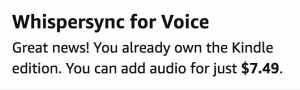 combines Kindle ebooks and Audible audiobooks into one package. You can read the ebook and switch to the audiobook and back again, never losing your place in the book. Many (but not all) Kindle ebooks include this option.
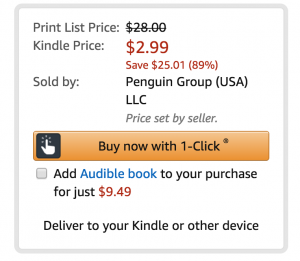
Purchase the Kindle ebook at Amazon.com and check the box to add the audiobook. Prices for the narrations range from about $2 to $15. However, that is usually much less expensive than purchasing the audiobook alone at Audible, and thus can be a great way to try some audiobooks.
 The Audible Daily Deal is a wonderful feature. Sign up for a (FREE) account at Audible and then choose to receive the Daily Deal email message (every morning) in your account preferences. Prices range from $1.95 to $7.95 each, and they offer quite a variety.
Memberships at Audible.com come with some nice benefits. With a monthly standard membership, you get one audiobook per month for the $8.99 fee, and there are several premium membership categories for more avid readers. Additionally, there are some great sales throughout the year, and member prices to purchase additional audiobooks are always 30% lower. There’s a free trial, too.
Other Vendor Sites
Some offer free books as well as purchases, some require a membership, but all are good sources.
- Audiobooks.com
- Apple Books
- Chirp (no membership and great sales)
- Spotify
- Google Play
- Audiobooks Now
- Downpour
- Rakuten kobo
- BookLender (rent books)
REVIEWING AUDIOBOOKS
Needless to say, I’ve listened to thousands of books. Most were excellent, but just like print or e-books, some were flops. It’s very worthwhile to write a review so other potential listeners know whether you liked a book or not and WHY. I want to know, for instance, if a book contains a lot of sex, violence, or foul language; I’m no prude, but I choose books based on my mood (and I don’t like surprises).
No one expects a 3000-word masterpiece of a review from us normal listeners. Even a short sentence that warns others is valuable, whether it’s about a poor narrator, a lack of character development, or bad sound engineering. On the other hand, if the book exceeded your expectations, that’s great to know, too. Maybe I’ll enjoy it for the same reasons.
It’s different—make that harder—to review an audiobook. Why? With a print book or an e-book, one normally reviews the story and plot, the skill of the writing, the character development, the pacing, the editing, and more.
When creating an audiobook review, the writing critique is the same, but a large part of the review should also be about the narrator’s work. It’s no exaggeration to say that no matter the quality of the writing itself, the narrator can make or break the enjoyment of an audiobook. Always—ALWAYS—listen to a sample of a book before purchasing; it might save you from a painful listening experience.
Finally, please let me know if you know of other sources for audiobooks and/or relate your experience with audiobooks. I also look forward to hearing from you after you listen to your first audiobook!